Conversation - June 19, 2026
Trust, Expertise, and Building Products People Actually Use
A conversation with Ryan Campion, Chief Strategy & Development Officer at Nexxt Spine, about AI, trust, product development, and what it takes to build technology that experts are willing to adopt.

1. Introduction
Interesting technical demonstrations are not the same as trusted products.
As HomeSignal explores how artificial intelligence and computer vision can improve property condition assessment, we're speaking with leaders across technology, healthcare, real estate, and AI to better understand what separates successful products from interesting technical demonstrations.
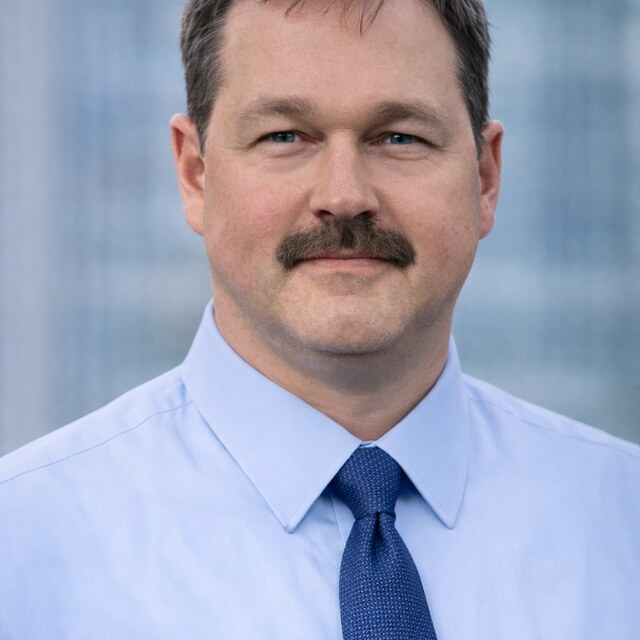
Recently, I spoke with Ryan Campion, Chief Strategy & Development Officer at Nexxt Spine, about AI, trust, product development, and what it takes to build technology that experts are willing to adopt.
While our conversation covered everything from medical technology to AI-powered decision making, one theme surfaced repeatedly: Building a technically impressive solution is not the same thing as building a product people will trust and use.
2. Trust
Trust starts with a clear proof source.
"The challenge we face moving forward with all these models is: what is that proof source? What does that look like?"
"The regulatory bodies and governmental agencies are playing catch up on this too. They don't even really know how to oversee these things or regulate these problems."
As AI becomes increasingly embedded in decision-making systems, establishing credible proof, validation, and accountability may become just as important as model performance itself.
3. Expertise
AI should act as a force multiplier for experienced professionals.
"I view that as a superpower for them."
"There's huge manpower challenges in all sectors and being able to superpower those people to ensure that you're getting the right solution, people will absolutely be willing to pay for that."
The goal is not to remove expertise from the process. The goal is to help experienced professionals do their jobs more consistently, more efficiently, and with better information.
4. Judgment
Experts are human too.
"People that are viewed as subject matter experts, they're humans just like anyone."
"I'm now very, very regimented in my approach to this."
"Oftentimes what people say in those contexts is not actually what they mean."
That point matters for product development. Expert users still need tools that fit their real workflow, reduce cognitive load, and make the next step clearer.
5. Product development
The biggest trap engineers fall into is jumping straight to the solution.
"We want to just jump to the solution."
"Get out of jumping right to the solution and go back to a very practical way to ask questions and unpack what am I solving, what am I trying to solve for you before I even start to build anything."
"I could have a device that cures cancer, but if I can't get it approved by insurers or hospitals, it doesn't matter."
A brilliant solution that nobody adopts is still a failed product.
For teams building applied AI products, that means the work has to happen in order:
- Understand the decision or workflow the product is meant to improve.
- Identify who needs to trust the output and what proof they require.
- Design the product around adoption, accountability, and expert review.
- Use the technology to strengthen the workflow instead of distracting from it.
6. Closing
Trust, adoption, workflow, and problem understanding matter most.
Trust matters. Adoption matters. Workflow matters. Understanding the problem matters more than building the solution.
Ryan Campion is the Chief Strategy & Development Officer at Nexxt Spine, where he focuses on product strategy, innovation, and the development of medical technology solutions.
HomeSignal is exploring how artificial intelligence, computer vision, and emerging technologies can improve the way properties are evaluated, maintained, and understood.
Learn more about what HomeSignal is building, meet the people building it, or browse more HomeSignal field notes.